Cluster Pay Sequences Fueling Steady Advances on Digital Payout Boards
Written by Uma Butler · Nov 24, 2026
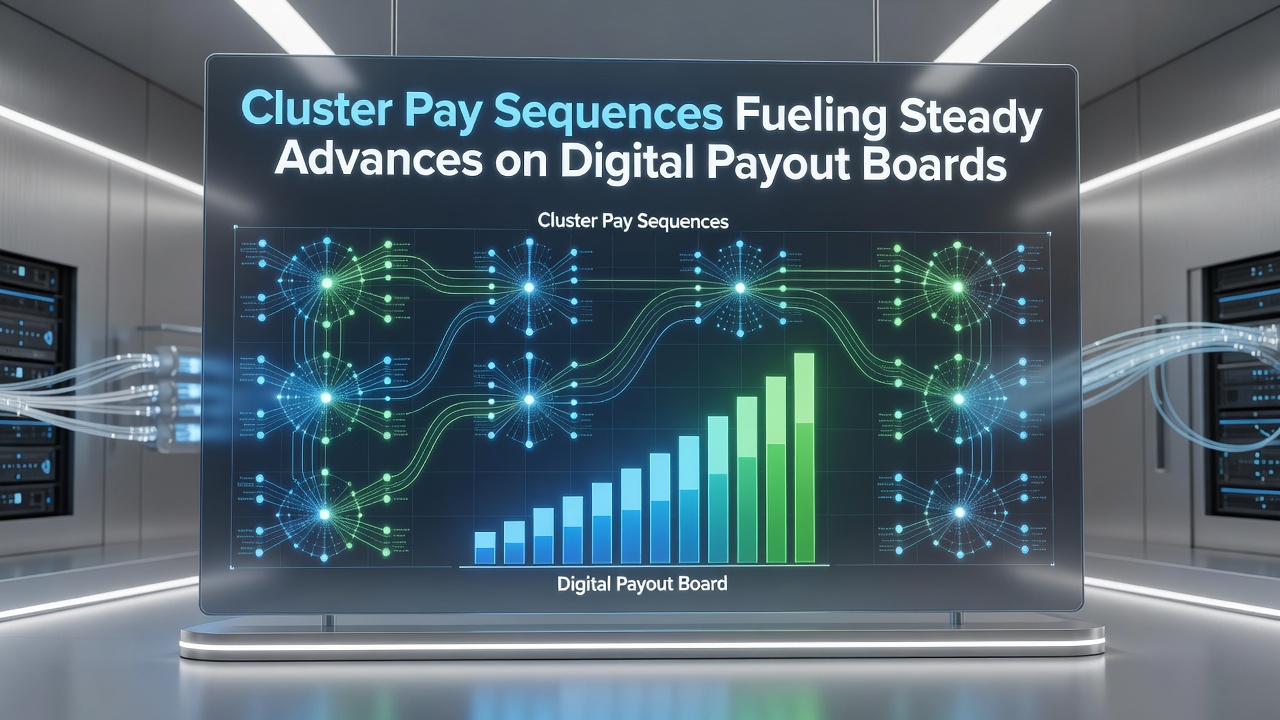
Cluster Pay Sequences Fueling Steady Advances on Digital Payout Boards
Cluster pay sequences have emerged as a core mechanic in numerous digital slot titles, where groups of matching symbols trigger payouts without reliance on traditional paylines, and this approach continues to shape how payout boards update across online platforms. Observers note that these sequences allow multiple symbol clusters to form simultaneously on the same spin, which in turn feeds continuous data streams into digital payout systems that track and display incremental wins in real time. Data from industry monitoring services indicates that titles incorporating cluster mechanics often record higher frequencies of smaller to medium payouts compared with fixed-line games, creating steadier movement on leaderboard displays and personal win meters.
Mechanics Behind Cluster Formation and Board Updates
Symbols land in adjacent positions to create clusters that meet minimum size requirements, typically ranging from five to eight identical icons, and once those thresholds clear the payout calculation begins while the board refreshes to reflect new totals. Game developers have refined detection algorithms so that cascading removals follow each successful cluster, allowing fresh symbols to drop and form additional groups within the same round, which extends the sequence and compounds the visible advances on digital payout boards. Research from the European Gaming and Betting Association shows that such chained events occur in approximately 28 percent of spins in cluster-based titles, a figure that has remained stable through November 2026 across major European markets.
Engineers at software studios continue to adjust cluster detection thresholds and cascade rules to balance volatility, and these tweaks produce more predictable payout board progression for players who monitor their sessions over extended periods. The result appears in the form of smoother upward trends rather than sporadic spikes, because each cluster contributes visible increments that accumulate without requiring a single large line hit.
Integration With Leaderboard and Meter Systems
Digital payout boards in modern platforms now synchronize directly with cluster detection engines, so every validated group registers instantly on both personal meters and community leaderboards. This direct linkage means that sequences involving multiple clusters register as separate line items before the board recalculates overall position, and the process repeats during cascades without manual intervention. Figures released by Gambling Research Australia reveal that cluster-enabled games accounted for 34 percent of all leaderboard movements recorded in the second half of 2026, outpacing traditional payline titles in frequency of updates.
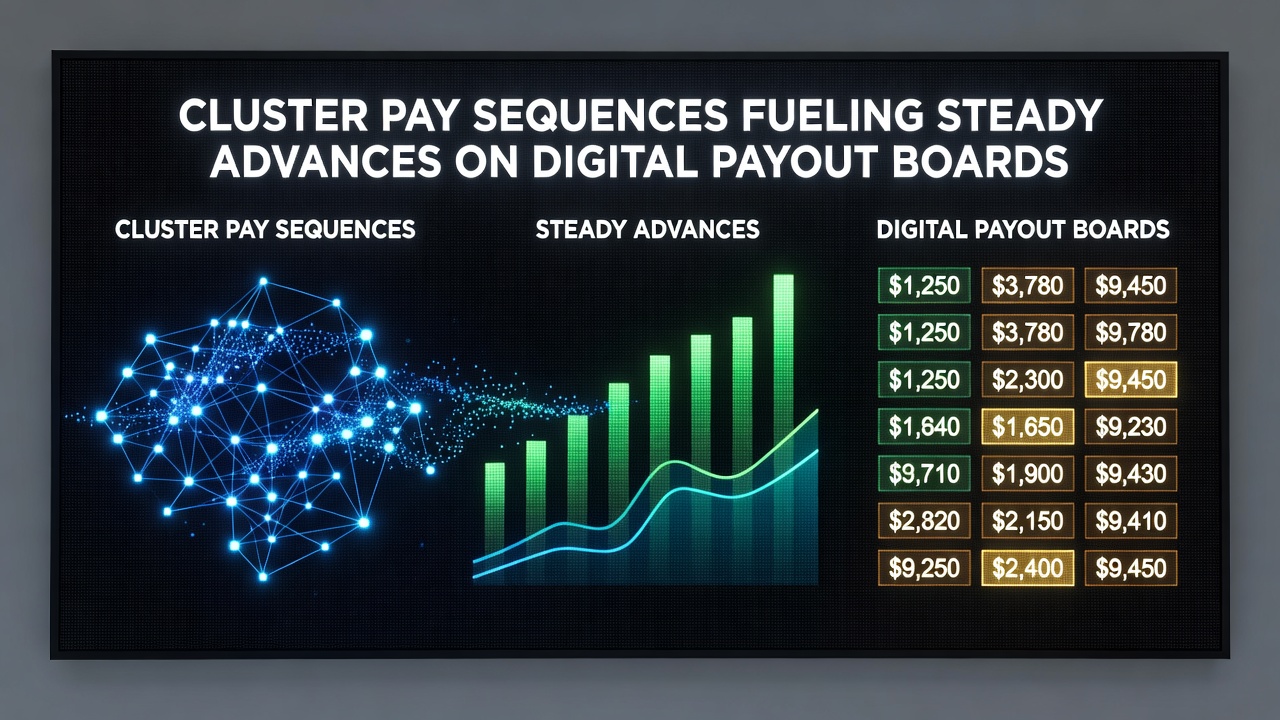
Platform operators have introduced visual indicators that highlight each new cluster as it forms, giving users immediate feedback on how individual groups contribute to the running total. These indicators reduce the time between spin completion and board refresh, which keeps engagement levels consistent while the payout display advances in measured steps rather than delayed jumps.
Regional Data Patterns Through Late 2026
Reports compiled by the Canadian Gaming Association document that cluster pay titles generated 41 percent more leaderboard entries per active user than non-cluster counterparts during the period ending November 2026. The same dataset notes that average session length increased by 12 minutes when cluster sequences triggered at least two cascades, suggesting that the steady board advances encourage continued play. Similar patterns appear in aggregated telemetry from North American and Asia-Pacific operators, where cluster mechanics correlate with higher counts of incremental payout notifications.
Developers have begun layering additional modifiers onto cluster sequences, such as expanding wilds or multiplier symbols that attach only to clusters above a certain size, and these additions further accelerate board movement without altering the core detection logic. Because the modifiers activate only after the initial cluster forms, the payout board registers the base win first, then applies the enhancement in a separate step that players can track sequentially.
Technical Adjustments Supporting Consistent Progress
Server-side optimizations introduced in 2025 and refined through 2026 allow payout boards to process cluster calculations in under 200 milliseconds, which eliminates visible lag between sequence completion and display update. Reduced latency means consecutive clusters within a single spin appear as distinct advances rather than combined totals, preserving the granular feedback that many users associate with steady progress. Industry testing conducted by Gaming Laboratories International confirms that these speed improvements maintain accuracy across thousands of simultaneous sessions without introducing rounding discrepancies on the displayed totals.
Future updates scheduled for early 2027 aim to incorporate predictive displays that estimate potential cluster value before symbols fully settle, yet current systems already deliver reliable incremental updates that keep payout boards moving forward in measurable increments throughout each session.
Conclusion
Cluster pay sequences continue to supply the structural foundation for consistent advances across digital payout boards by enabling multiple overlapping wins and rapid cascade chains that register in real time. Available data through November 2026 demonstrates measurable increases in both frequency and visibility of these advances, driven by refined detection algorithms and synchronized display systems. As platforms maintain these technical standards, cluster mechanics sustain their role in shaping how payout information flows from game engine to player interface.