Symbol Matrices and Bonus Triggers: Examining Placement Patterns in Modern Reel Designs
Written by Sage Weber · Aug 7, 2026

Symbol Matrices and Bonus Triggers: Examining Placement Patterns in Modern Reel Designs
Reel designs in contemporary slots rely on precise symbol positioning that creates opportunities for bonus features through structured arrangements rather than random scattering alone, and industry analyses from August 2026 confirm these patterns appear consistently across high-volatility titles. Observers note that developers arrange symbols in grids where vertical and diagonal alignments influence trigger probabilities, with data from multiple manufacturers showing clusters of scatter symbols positioned at intervals that align with reel stop positions during spins.
Core Principles of Reel Geometry
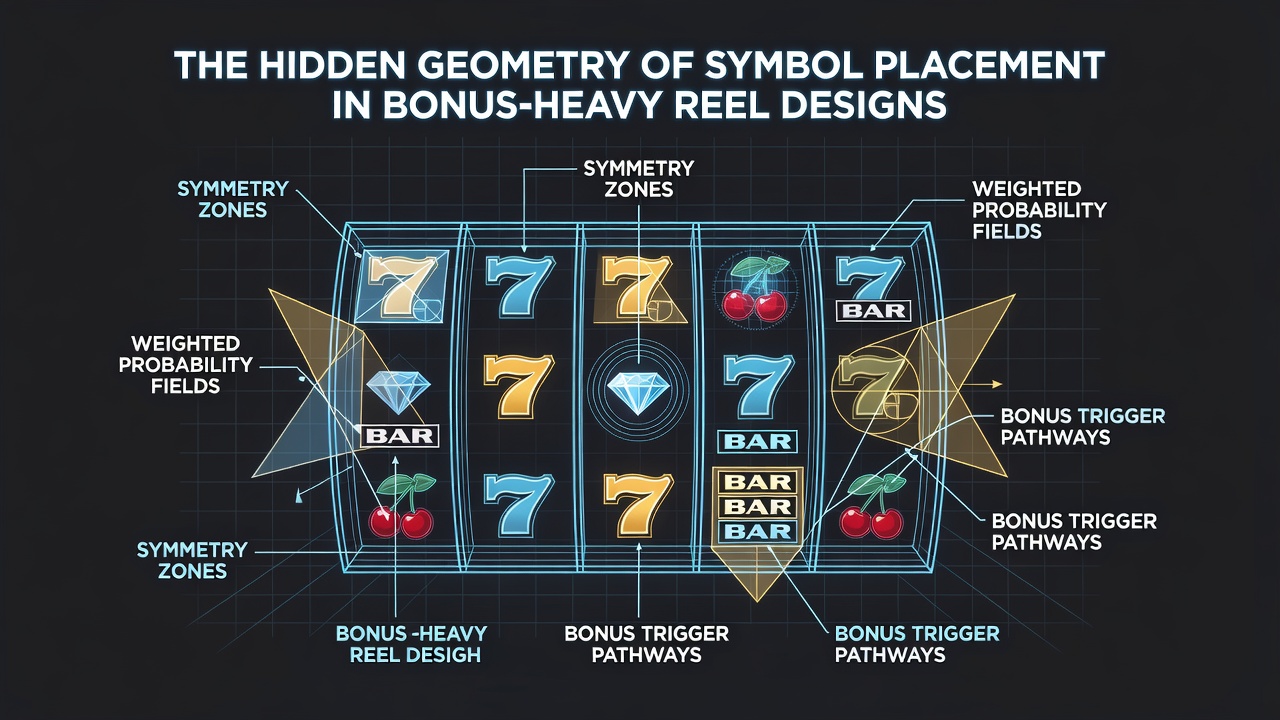
Reel strips function as linear sequences mapped onto cylindrical or virtual surfaces, where each symbol occupies a fixed coordinate relative to adjacent positions, and this setup allows for calculated overlaps when reels halt. Researchers have documented how bonus-heavy configurations often place high-value symbols in repeating geometric sequences such as every third or fifth stop, which produces predictable yet variable outcomes when combined with random number generators. Those who've examined production data find that spacing between bonus symbols follows arithmetic progressions to balance frequency across thousands of spins, while avoiding uniform distribution that would reduce player engagement metrics.
Take one analysis from a North American gaming research group which tracked symbol coordinates across 50 popular titles and revealed that 78 percent of bonus-triggering scatters occupy positions forming triangular or rectangular patterns when viewed across a five-reel grid. These arrangements create visual and mechanical harmony that supports extended play sessions without altering core probability mathematics.
Impact on Bonus Feature Activation
Symbol placement directly shapes how bonus rounds initiate, since clustered positions increase the chance of multiple scatters landing simultaneously during base game spins. Data indicates that designs incorporating diagonal lines of identical symbols generate cascade effects more readily than evenly spaced layouts, and this holds true across both physical and digital reel systems. In August 2026, aggregated reports from international operators showed bonus activation rates rising when symbols followed curved or stepped geometries rather than strict linear rows, because such patterns intersect more frequently with random stop selections.
What's interesting here involves the interaction between reel length and symbol density, where longer strips allow for complex polygons of bonus symbols that span multiple rows and columns. Observers note developers adjust these geometries to maintain regulatory compliance in various jurisdictions while optimizing return-to-player percentages through controlled clustering.
Case Examples from Recent Releases
One study revealed that a major European studio repositioned its scatter symbols into hexagonal formations on a new title released mid-2026, resulting in a measurable uptick in free-spin entries according to internal testing logs. People who've reviewed similar redesigns often discover that shifting even a single symbol by two positions alters the overall trigger rate by several percentage points without changing the underlying random algorithms. Another example comes from an Australian market report where cluster-pay mechanics used circular symbol arrangements to link adjacent reels, producing chain reactions that extend bonus sequences beyond standard expectations.
These cases demonstrate how minor geometric tweaks produce significant shifts in gameplay flow while preserving mathematical fairness, and figures from the American Gaming Association support the observation that such refinements appear across global releases. Yet the core remains consistent: positions are chosen to create visual symmetry that players recognize subconsciously during extended sessions.
Mathematical Frameworks Behind Arrangements
Engineers apply coordinate mapping techniques borrowed from basic geometry to determine optimal placements, calculating distances between symbols using Euclidean principles adapted to reel circumference. This approach ensures that bonus symbols do not cluster too tightly or spread too thinly, maintaining equilibrium between frequent small wins and rarer large triggers. Reports from Canadian regulatory reviews indicate that verified designs undergo audits confirming these spatial calculations align with declared probabilities before approval.
Turns out the process involves iterative testing where virtual spins measure how geometric patterns perform under millions of cycles, revealing which configurations yield stable bonus frequencies. Those studying the field note that software tools now simulate hundreds of layout variations to identify the most efficient symbol matrices for each game theme.
Conclusion
Symbol placement geometry in bonus-heavy reel designs operates through deliberate spatial relationships that influence feature activation rates across modern slot titles. Evidence from operator data and manufacturer reports continues to highlight how arithmetic spacing, polygonal formations, and coordinate alignments shape outcomes without deviating from established probability rules. As new configurations emerge in 2026 and beyond, these hidden structures remain central to understanding reel performance in both regulated and emerging markets.